
QAISys 2026

NSF Workshop on Systems Research at the Quantum-AI Frontier – OS, Fault Tolerance, and Edge Integration

April 3, 2026 - Washington, DC USA

About the Workshop

Hosted at Duke in DC


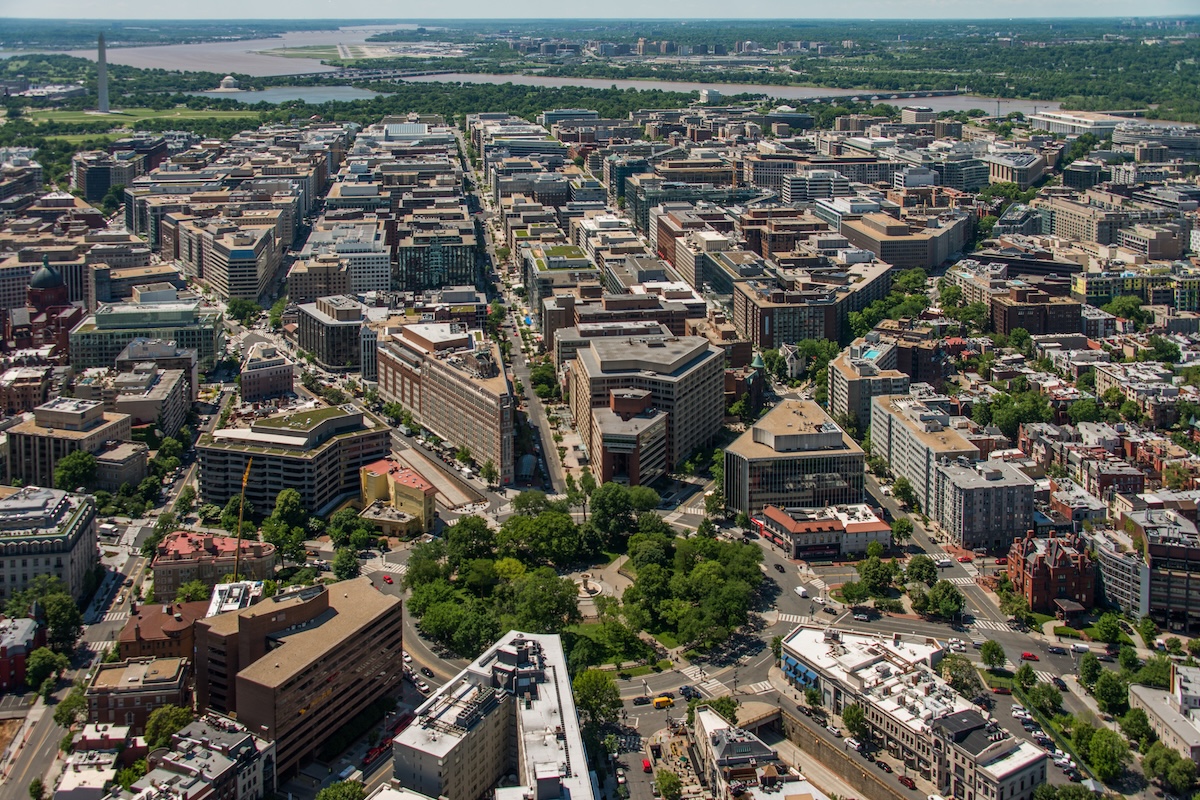
David M. Rubenstein Conference Center
1201 Pennsylvania Avenue, NW Suite 500, Washington, DC 20004


Following the successful NSF QuantumOS workshop hosted in 2024 in Austin, TX, we invite you to attend the second workshop QAISys 2026 in Washington, DC.

Quantum computing is moving beyond proof-of-concept demonstrations into an era defined by systems challenges. The central question is no longer whether individual components work, but how to co-design algorithms, software, and hardware into integrated, high-performance, fault-tolerant systems. Achieving scalable quantum advantage requires careful orchestration across the entire computing stack, from real-time OS primitives and adaptive compilers to distributed classical co-processors and edge-connected infrastructure.

At the same time, rapid advances in artificial intelligence offer powerful new tools for managing system complexity. Embedding AI-driven optimization into quantum compilers, control loops, error decoding pipelines, and calibration workflows may fundamentally reshape how quantum systems are built and operated. The resulting intersection defines the focus of this workshop.

QAISys (pronounced “Kay-see’s”) brings together researchers from quantum computing, computer systems, AI, and edge computing to surface open problems, challenge assumptions, and define the research agenda for integrated quantum-AI systems. The workshop features invited talks, lightning presentations, panel discussions, and collaborative breakout sessions organized around four research thrusts.

This workshop is supported by the US National Science Foundation Award #2435033.


Important Dates

February 26, 2026

End of day
Call for position papers opens


March 18, 2026

End of day
Submission deadline


March 20, 2026

End of day
Author Notification


March 27, 2026

End of day
Registration deadline


April 3, 2026

End of day
Workshop


Submissions & Registration


Workshop Themes
Submissions are solicited across four interconnected research thrusts. Topics include, but are not limited to, the following:
  • System-level co-design across algorithms, software, and hardware,
  • Resource estimation and realistic benchmarking ,
  • AI methods for quantum control, calibration, or decoding,
  • Quantum-edge system co-design,
  • Error correction, magic state management, and system bottlenecks,
  • Hybrid quantum-classical systems
  • Scaling challenges and practical deployment

  • Submission Guidelines

    We welcome submissions presenting a clear perspective, challenging an assumption, or proposing a new research direction. Both technical and visionary perspectives are encouraged. Original research, works-in-progress, and position statements drawing on previously published results are all in scope.
    Accepted abstract will be distributed during the workshop and will be considered for a talk and/or poster presentation. Since the abstracts are not considered as proceedings in the ACM/IEEE digital libraries, they can be submitted to other venues without restrictions.

    Accepted papers will be invited for a lightning talk and/or poster presentation; selected authors will participate in moderated panel discussions


    Please follow the instructions below to prepare and submit your abstract. If you have any questions, please contact Florian Carle from the Yale Quantum Institute

  • Prepare a 2-3 page abstract (standard two-column or single-column conference style) in PDF format. References cited do not count towards the page limit.
  • Register and login to EasyChair at the link below
  • Enter author information fields and attach your PDF.
  • Submit by Wednesday, March 18th.
  • Author Friday by March 20th.


  • Who Should Submit?

    QAISys is aimed at researchers and practitioners working at the intersection of quantum computing, computer systems, and AI. We especially encourage submissions from:

  • Faculty, postdocs, and researchers in quantum computing, computer systems, and AI-driven hardware design
  • Industry practitioners building quantum hardware, control systems, compilers, or cloud quantum platforms
  • Advanced graduate students with novel results or a clear perspective on an open problem
  • Researchers from the edge computing or distributed systems communities exploring connections to quantum architectures

  • Submissions need not be complete research papers. A well-motivated position statement or a sharp articulation of an open problem is equally welcome.


    NSF Workshop on Systems Research at the Quantum-AI Frontier


    April 3, 2026

    8 am
    Check in
    8:30 am
    Welcome and Introduction by the organizers


    SESSION 1: Quantum OS and Real-time Resource Management

    8:50 am
    Invited Talk
    To Be Announced
    9:20 am
    Lightning Talks ×2 (10 min)
    To Be Announced


    SESSION 2: AI-Integrated Compilation and System Adaptation

    9:30 am
    Invited Talk
    To Be Announced
    10 am
    Lightning Talks ×2 (10 min)
    To Be Announced
    10:10 am
    Coffee
    10:30 am
    Panel Discussion 1: Sessions 1 & 2
    Quantum OS and AI Integration (40 min)
    11:10 am
    Lunch


    SESSION 3: Quantum-Edge System Co-design

    12:10 pm
    Invited Talk
    To Be Announced
    12:40 pm
    Lightning Talks ×2 (10 min)
    To Be Announced


    SESSION 4: Fault-Tolerant Quantum-Classical System Design

    12:50 pm
    Invited Talk
    To Be Announced
    1:20 pm
    Lightning Talks ×2 (10 min)
    To Be Announced
    1:30 am
    Panel Discussion 2: Sessions 3 & 4
    Quantum-Edge Integration and Dependability (40 min)
    2:10 pm
    Coffee
    2:30 pm
    Parallel A: Poster Session
    2:30 pm
    Parallel B: Breakout Discussions and White Paper Working Group (for invited participants)
    4:30 pm
    Closing Remarks and Community Roadmap Discussion

    Getting there & Accommodation

    We strongly advise taking the Metro to the venue. Parking is very limited and expensive in the Metro Center area, though street parking may be available at parking meters. UBER/Lyft are always an option as well, given the office location in proximity to the US Capital and White House please take into consideration travel times should there be a motorcade.

    METRO
    For timetables, maps, and more information on public transportation visit www.wmata.com.

    Metro Center services the Orange, Blue, Silver, and Red Lines: Take the exit on 12th and F street. From there, head south toward the National Mall. The White House will be on your right-hand side several blocks over. Our office building is on 1201 Pennsylvania Avenue NW, Suite 500.

    Federal Triangle services the Orange, Blue, and Silver Lines: Once there, take the escalator to 12th street and turn left (North). Cross Pennsylvania Avenue and turn left again to access our entrance at 1201.

    Archives-Navy Memorial-Penn Quarter services the Green and Yellow Lines: Exit the metro station and walk NW with Pennsylvania Ave NW on your left and the memorial on your right. Cross over 12th street and turn right to access our entrance at 1201 Pennsylvania NW.

    PUBLIC PARKING
    Nearby parking garages include: 1201 Pennsylvania Ave NW | 1220 E St NW | 1111 Pennsylvania Ave | 555 12th St NW
    Metered spots are also available on the 12th streetside of the building. Rates and times are determined by parking companies.

    HOTEL
    We are working on a preferential rate with a nearby hotel for all workshop attendees who need to stay overnight. More information will be provided soon.
    Organizing Committee

    Yongshan Ding (Co-Chair), Yale
    Yiran Chen (Co-Chair), Duke
    Zheng Zhang, Rutgers
    Yunong Shi, AWS/UMich
    Frank Müller, NC State
    Lin Zhong (Yale)
    Kenneth Brown (Duke)

    Local Organizer

    Rajashi Runton, Duke Athena AI Institute

    Administrative Organizer

    Florian Carle, Yale Quantum Institute